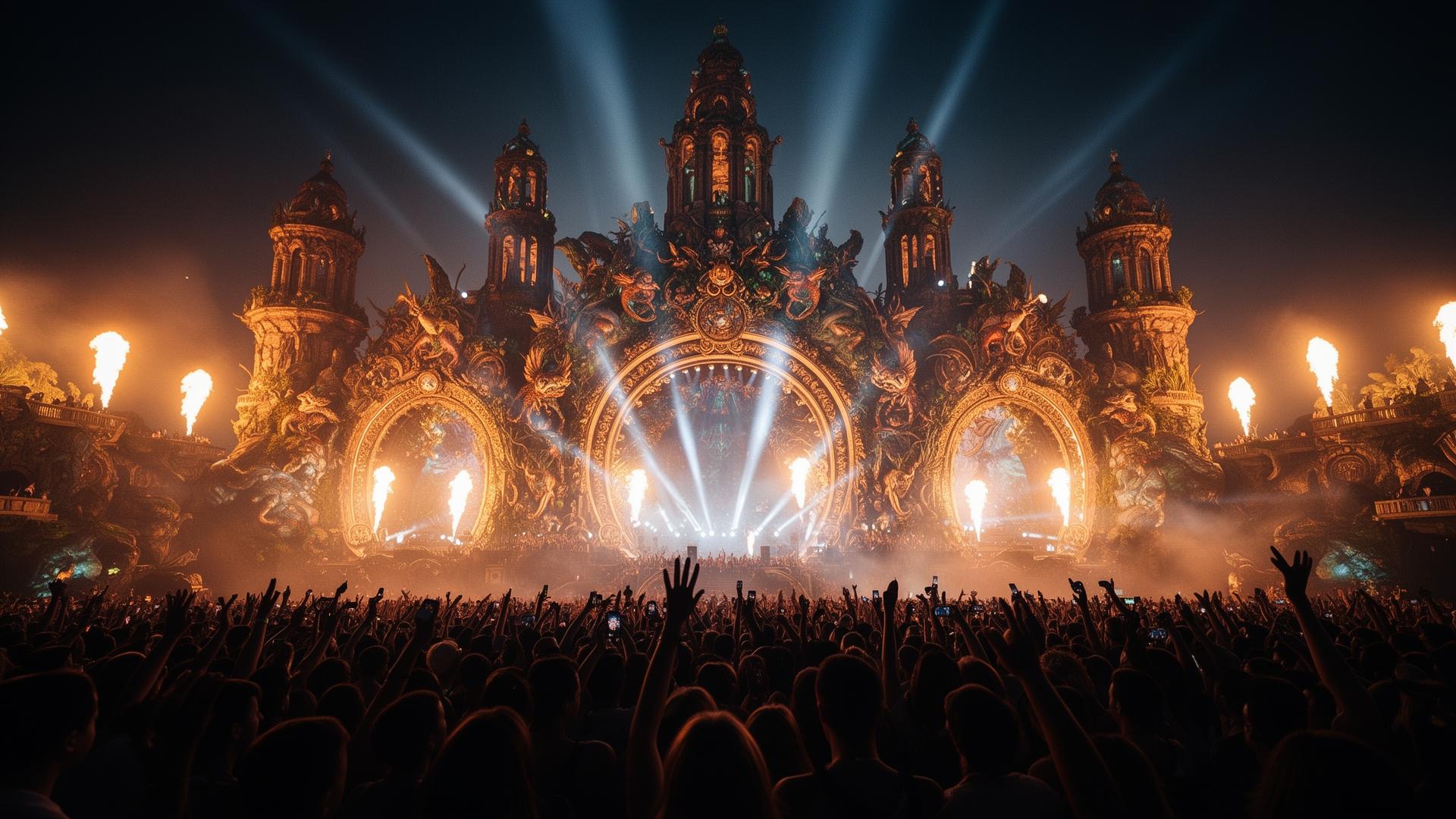
The Difference Between an Event and an Experience
Every experience has logistics. Schedule, technology, catering, flow. That's the craft, and it has to be solid. But craft alone only answers one question: what happens when?
The more interesting question is a different one: what remains when the last guest closes the door behind them?
Experiences don't happen by accident
An experience isn't a collection of good moments. It's a story told from beginning to end. And that story starts long before anyone physically arrives: at the first encounter with a brand, a place, an idea. At the website, the first image, the first sentence.
From there, everything is a decision. How does the communication sound? How does the welcome feel? What do people see first when they enter? How do the people who work there behave? What do guests take with them when they leave – as memory, as feeling, as a story they pass on?
When all of that fits together and comes from a single thought, something emerges that's hard to describe but immediately felt. When it doesn't fit, you notice that too – even if you can't quite say why.
I come from two worlds
One is film and advertising. Over many years I've worked for national and international brands. There you learn how images carry an attitude. How to condense a message into twenty seconds so it sticks. How brand worlds stay consistent across channels without becoming dull.
The other is the stage. For more than thirty years I've stood on it myself. As a performer, a singer, a director. From that grows a kind of knowledge you can't read in any briefing: how long can a silence last before it becomes awkward? When do you build tension, when do you cut it? When is a staging too much, when too little?
These two worlds rarely sit at the same table. With me they do. And that is the core of what I do.
Thinking bigger
Experience Design is not an event format and not a communications discipline. It's an attitude that runs through everything.
A hotel isn't a collection of rooms. It's a sequence of moments that together tell a story. A restaurant isn't a menu with chairs, but a stage where the same piece is performed every evening. A leisure venue, a cultural centre, a theme park: anywhere people come to experience something, the same question arises: did someone think the whole picture through, or are good individual parts simply standing next to each other?
With immersive experience worlds this becomes especially clear. There, the experience is the product. Every path, every corner, every detail is a dramaturgical decision. A break in the story, a wrong tone, a transition that doesn't work pulls people out of the experience. And once out, they don't come back in easily.
Many businesses have good individual parts. A strong core idea, a beautiful building, committed people. What's missing is someone who holds it together. Who says: this fits. This doesn't. Here we're losing the story.
How I work
I start from the question: what should people take home?
Only then comes the how. Film, stage, space, language, music, light, communication. Sometimes as a one-off project, sometimes as an ongoing role – as someone who watches over a place so it always sounds and looks like itself. Across every part, every channel, every moment.
That is Experience Design. Not a discipline. An attitude.
Frequently asked questions
What separates an experience from a regular event?+
An event has a schedule. An experience is a story told from start to finish – from the invitation through the space to the memory someone carries home. It begins with the question of what should remain. Everything else serves that.
Who do you work for in Experience Design?+
Anywhere people come and are meant to experience something: hotels, restaurants, leisure venues, cultural centres, theme parks, immersive experience worlds – and of course companies that want a live experience staged with full dramaturgy. Sometimes as a one-off project, sometimes as an ongoing role watching over the whole picture.
How does an experience designer differ from an event agency?+
An event agency organises. We direct. We combine experience from film and advertising for national and international brands with more than thirty years on stage – and treat space, dramaturgy, communication and detail as a single piece with one attitude.
Ready for an experience?
Let's find out together how we can turn your next event into something people will remember.
Book a callMore articles
What is Experience Dramaturgy? The Difference Between a Schedule and an Experience
An event with a schedule is not yet an experience. Learn what experience dramaturgy means and why it's the key to unforgettable moments.
Read more Live Events & Corporate PartiesPlanning a Corporate Christmas Party: 7 Ideas That Will Wow Your Team
A corporate Christmas party is more than mulled wine and buffets. Discover 7 creative ideas that will truly excite your team – from immersive experiences to karaoke shows.
Read more